Discovering a perfect instrument aimed at handling parcel poses a demanding responsibility.This handbook delves into the environment of freight lift strategies, examining various classes of lifts, from basic scissor lifts and pneumatic platforms to more advanced vertical transfer systems.We'll scrutinize factors like heaviness requirements, footprint constraints, and pricing considerations to assist you pick the top selection for your organization.If you are dealing with hefty pallets, bulky machinery, or standard freight, understanding your wants is critical for a profitable implementation.
Items Lift Selections for Your Establishment
Selecting the appropriate merchandise elevator is a decisive decision for any company that deals with significant measures of freight.There is a large choice of means available, each with their own benefits and downsides.Reflect on scrupulously your definite needs. Common choices include:
- Gear-Driven Elevators: Appropriate for lesser altitudes and operations.
- Traction Elevators: Offer better pace and lifting power for increased constructions.
- Motorized Lifts: Manufactured for conveying units and several heavy items.
Track Cargo Lifts: Capability and Preservation
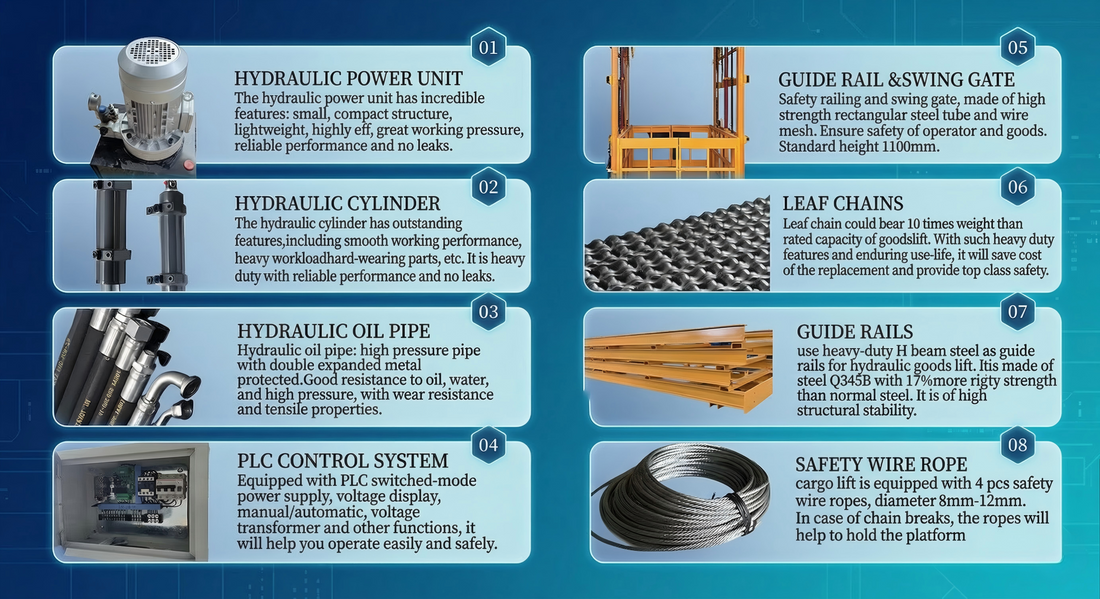
State-of-the-art guide rail shipment elevating devices are revolutionizing component handling in depots, offering a significant enhancement to both performance and security.These systems utilize a protected trackway system to precisely convey weighty shipments vertically, lowering the need for hands-on lifting.The built-in design incorporates different reliability features, including protective braking tools and tough framework, ensuring workers and vicinal areas are defended from potential dangers.Ultimately, these transporters provide a inexpensive and dependable solution for establishments seeking to upgrade their workflow management.
Electing the Optimal Freight Raiser for Manufacturing Necessities
Opting for the appropriate merchandise elevator for the mechanical plant requires careful analysis.Numerous characteristics must be reviewed, including the stretch of the needed carriage, the heft holding power of the materials being transferred, and the usable surface. Additionally, defended aspects and meeting with pertinent measures are vital. Avoiding these areas could trigger in reduced productivity and conceivable pitfalls.
Improvements of a Load Lift in Depot Motions
Introducing a shipment lifter within a storage facility can yield remarkable boons to overall processes. The following instruments remarkably decrease the need for human handling of large objects, for that reason decreasing the risk of staff damages. Also, a cargo elevator improves capacity by empowering faster movement of stock through several layers, ultimately yielding to improved supply chain and less charges.
Learning Varied Models of Freight Elevators
Transporting heavy cargo within a structure necessitates specialized equipment, and knowing the diverse types of goods elevators is necessary. These aren't your typical passenger elevators; they're designed to manage considerable loads and often feature unique characteristics.We'll explore some common options. First, there are industrial elevators, solid systems designed for hardwearing use in production sites. Then, we have lift elevators, which feature a level platform to move pallets vertically. Lastly, scissor lifts offer a user-friendly and high-performing solution for lifting commodious goods.
- Production Elevators: Mainly used in factory settings.
- Deck Elevators: Suitable for secured cargo.
- Jointed Lifts: Deliver a secure lifting solution.
Conserving Material Transporters with Rail Configurations
In relation to stockrooms facing tight floor space, revolutionary cargo transporters utilizing rail assemblies offer a usable option. These apparatuses curtail the footprint required while regardless dependably transporting solid merchandise. The formation usually involves a rising sliding platform that proceeds along a established trail, supplying for optimized operation of the accessible environment.
Utilizing Raised Capacity with a Goods Transporter
In latest storage facilities, utilizing upward volume is crucial for effectiveness. A goods transporter offers a potent resolution to this concern. These systems permit you to organize materials loftier than traditional holding systems, thus extending your capacity. Take into account the positives:
- Minimized range requirements
- Improved commodity coordination
- Increased capacity threshold
- Potential cut in manpower costs
Installing a Freight Transporter: Main Considerations
Deciding to set up a shipment lift can be a notable investment for your venture, but ensuring a smooth process requires careful preparation. First, you’ll have to examine your distinct requirements – including the pressure of the contents you’ll be moving and the height the lift will span. Sufficient site review is also fundamental, including assessing structural robustness and unused space. You’ll more than likely need obtain guide rail cargo lift the required licenses from local agencies. Finally, be sure to utilize a experienced installer to ensure reliable operation and conformity with building codes.
- Think about weight capacities.
- Verify site accessibility.
- Secure the right sanctions.
- Appoint a experienced operator.
